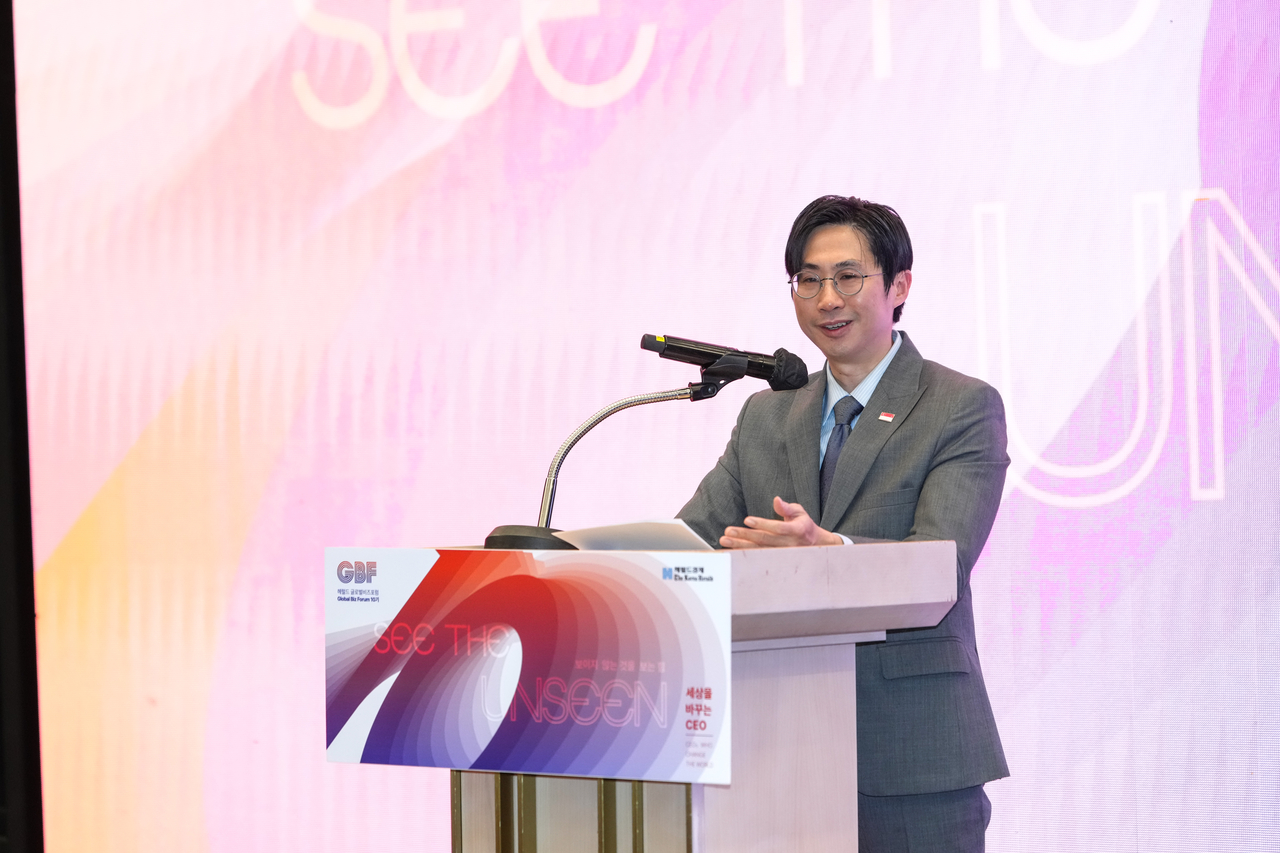
Singapore's Ambassador to Korea, Wong Kai Jiun, expressed high hopes for deeper cooperation between Singapore and South Korea under their strategic partnership.
"Because our two countries share common strategic perspectives, such as on free trade, multilateralism, and a rules-based international order, we have found each other to be ready and natural partners across many sectors," Wong said during the seventh session of the 10th Global Biz Forum on Wednesday. The forum, hosted by The Korea Herald and Herald Business, was held at the Ambassador Seoul Pullman Hotel in Jung-gu.
The envoy outlined five key areas of bilateral cooperation under the strategic partnership established during a summit between President Lee Jae Myung and Singapore Prime Minister Lawrence Wong in Seoul in November 2025.
These span politics, security and public administration; trade and economic relations; sustainability and energy transition; advanced technology and research and development; and people-to-people exchanges.
The two countries established diplomatic ties on Aug. 8, 1975, celebrating 50 years of relations last year. This year marks the 20th anniversary of their free trade agreement, which entered into force in 2006.
Wong highlighted how bilateral ties have expanded beyond traditional economic cooperation through agreements and initiatives covering new areas, including digital technology, investment and green industries.
Among them are the Digital Partnership Agreement, which took effect in 2023, and the Digital Economy Partnership Agreement, which South Korea joined in May 2024 as the first non-founding member after founding members Singapore, New Zealand and Chile. Korea also joined the Future of Investment and Trade Partnership, of which Singapore is a founding member, in July.
The two sides are pursuing a Green Economy Partnership Agreement with New Zealand, with negotiations underway since October 2025.
"When the two leaders met in Seoul last year, they described Singapore and South Korea as 'two bright stars' that together provide light and hope against the darkness of our complex and unpredictable world," he said.
"It speaks to what each of our two countries has achieved, as well as to what we can continue to do together as we navigate our rapidly changing external environment, with all its attendant risks and opportunities."
Wong also pointed to efforts to upgrade the free trade agreement between South Korea and the Association of Southeast Asian Nations, with talks expected to conclude next year, when Singapore assumes the ASEAN chairmanship.
"South Korea is an important partner for ASEAN. It was ASEAN's sixth-largest trading partner and seventh-largest source of foreign direct investment last year," he said.
"The upgrade will cover new areas including supply chain connectivity, energy, sustainable development and the digital economy, and we are optimistic about the new growth opportunities that it will unlock for our businesses."
Incheon mayor eyes AI-driven growth
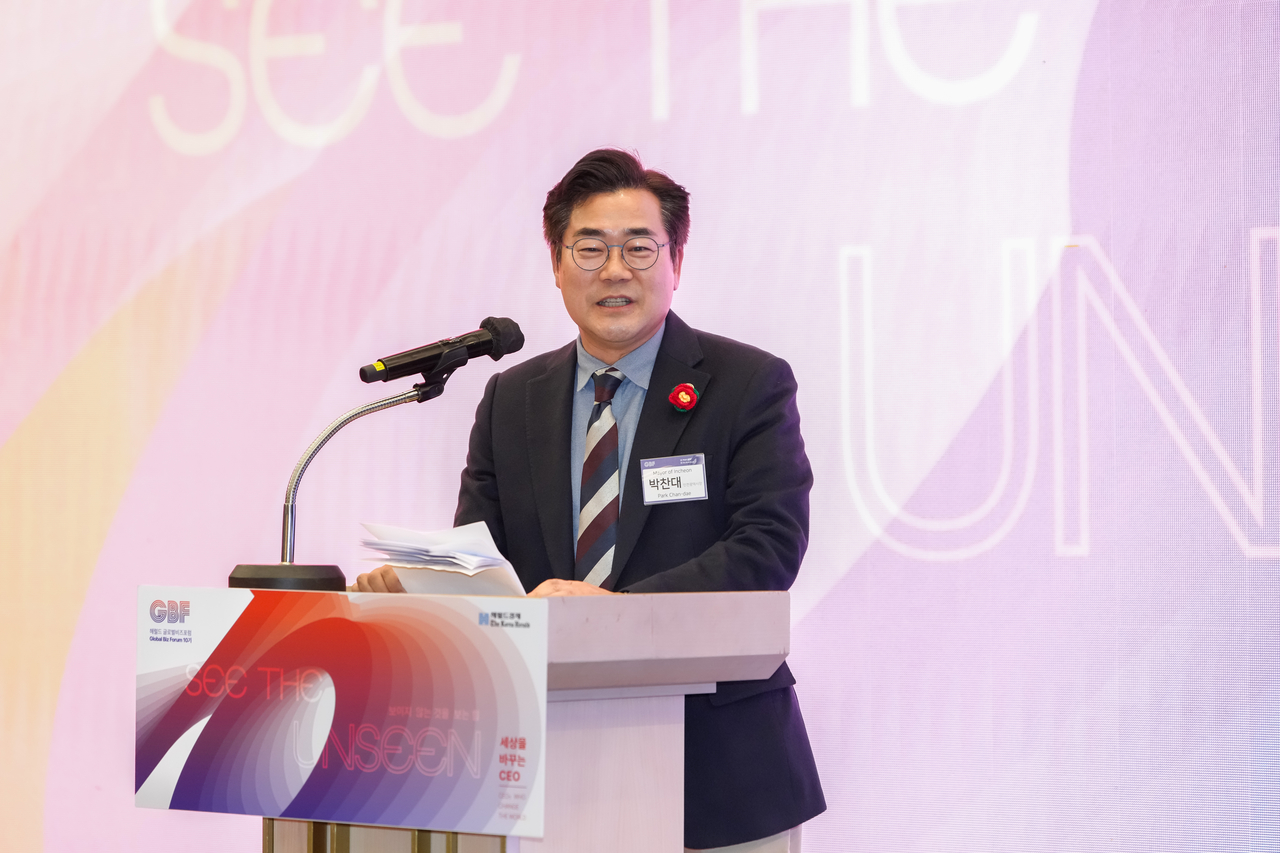
Artificial intelligence was another major focus of Wednesday's session, with Incheon Mayor Park Chan-dae highlighting its growing role in reshaping urban competitiveness and the global economy.
Park said the city aims to strengthen its industrial competitiveness by integrating advanced technologies with Incheon's existing manufacturing base.
"When people think of Incheon, they often think of its world-class airport, seaport and manufacturing industries that helped drive Korea's industrialization," he said.
"But I see another opportunity for Incheon: creating new engines of growth in advanced industries by building on the industrial foundation and technological expertise the city has developed over many years."
The city plans to integrate AI into manufacturing complexes in Namdong, Seo and Bupyeong districts, expanding physical AI testing facilities in Cheongna and Songdo. It will also develop Songdo into a global AI hub that brings together international organizations, businesses and research institutions.
At the heart of these efforts, Park emphasized, is the goal of improving residents' quality of life by creating jobs, boosting the local economy and making everyday life more convenient through technological innovation.
"We want to turn Incheon's potential into new opportunities for growth and ensure that the benefits of that growth are shared with its residents. That is the future I envision for Incheon as mayor."
'AI reshapes role of business leaders'
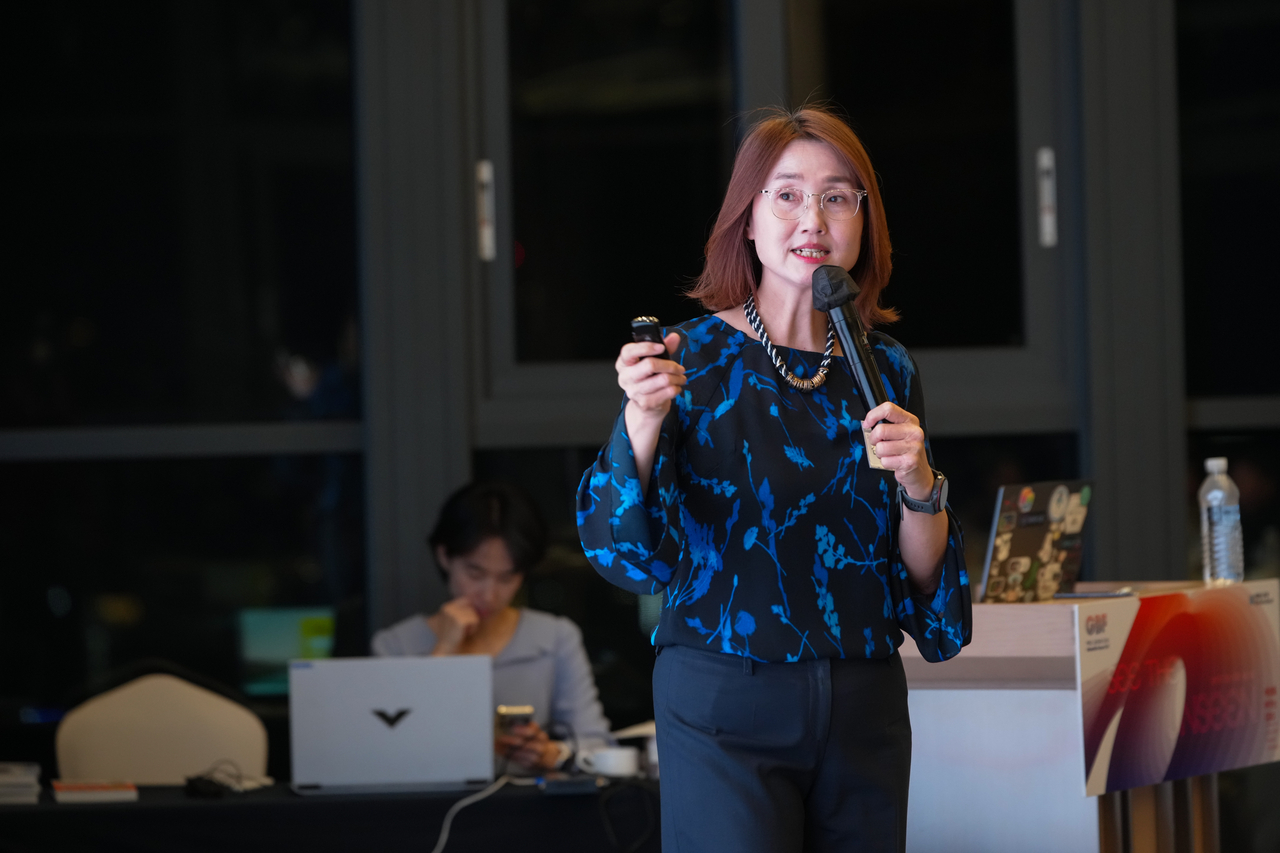
Kim Sung-mi, Azure success manager at Microsoft Korea, urged business leaders to move beyond simply adopting AI tools and focus on transforming their organizations to stay competitive in the AI era.
"Just as consumers can pick up the latest products at a supermarket, we have entered an era where businesses can choose from a wide range of advanced AI models as needed," Kim said.
"The gap in AI competitiveness lies not in the tools themselves, but in how effectively organizations can adopt and integrate them," she added.
Kim encouraged business leaders to rethink existing workflows, identifying which tasks could be handled by AI and which would still require human judgment.
Rather than pursuing sweeping changes from the outset, she recommended starting with simple tasks, such as using AI to draft a single document, before gradually expanding its use.
She also emphasized the importance of enabling employees to identify their own needs and develop AI solutions with technical support from IT teams, rather than leaving the process entirely to IT departments.
"Like physical muscles, our ability to adapt to change grows stronger through repetition, and weakens when left unused," Kim said.
"Without execution, change will not happen, whether for individuals or organizations. Start small and gradually scale up."
Following Lee’s address, Choi Jae-boong, former vice president and professor of mechanical engineering at Sungkyunkwan University, delivered a lecture on the rise of physical AI and the opportunities it presents for South Korea.
"The real battleground will be physical AI. Imagine a world where taxis drive themselves and robots work in factories," Choi said.
He said that South Korea is well positioned to compete in the emerging physical AI industry, citing the country's strengths in semiconductors, AI technology and manufacturing.
Choi pointed to Samsung Electronics and SK hynix's semiconductor capabilities, Hyundai Motor Group's automotive and robotics technologies, and the AI expertise developed by domestic technology companies such as Naver and Kakao.
He also described the intensifying technological rivalry between the United States and China as an opportunity for Korea to strengthen its position in the global AI industry.
While the United States leads in advanced AI technologies, Choi noted that its manufacturing capabilities remain relatively weak, creating opportunities for cooperation with Korean companies.
"We may not become a dominant power, but we can become the best partner to one country," Choi said.
cjh@heraldcorp.com